

What are the disadvantages of each bop ram type?
Dec 31, 2025
Leave a message
As a supplier of BOP (Blowout Preventer) ram types, I often encounter inquiries from clients about the characteristics of different BOP ram types. While these components are essential for well - control operations in the oil and gas industry, it's crucial for operators to be aware of their disadvantages as well as their advantages. In this blog, I'll delve into the drawbacks of each BOP ram type to help you make informed decisions when it comes to your well - control needs.
Blind Rams
Blind rams are designed to seal the wellbore when there is no drill pipe or other tubulars present. They are a critical part of the BOP stack, especially during the initial phases of well construction or in emergency shut - in situations. However, they have several notable disadvantages.
One of the primary drawbacks of blind rams is their limited application. They are only useful when there is no pipe in the hole. If a tubular is present in the wellbore, the blind rams cannot be fully closed without causing significant damage to the pipe. This means that in operations where the drill pipe is frequently in and out of the well, the utility of blind rams is restricted.
Another issue is the high - pressure sealing challenge. When the well pressure is extremely high, achieving a reliable seal with blind rams can be difficult. The rubber elements of the rams may be deformed under high pressure, leading to potential leaks. This can pose a serious risk to the safety of the well and the surrounding environment. Additionally, the wear and tear on the rubber elements are relatively high, especially during repeated closing and opening operations. Frequent replacement of these elements is necessary, which adds to the operational cost.
Pipe Rams
Pipe rams are designed to seal around the drill pipe or other tubulars in the wellbore. They are widely used in drilling operations to prevent the uncontrolled flow of fluids from the well. However, they also have some inherent disadvantages.
Pipe rams are size - specific. They are designed to seal around a particular size of drill pipe or tubular. If the diameter of the pipe changes during the drilling process, a different set of pipe rams may be required. This means that operators need to keep a variety of pipe rams in stock, which increases inventory costs. Moreover, changing the rams in the field can be a time - consuming and complex process, leading to downtime in the drilling operation.
In cases where the drill pipe is not centered in the wellbore, the sealing performance of pipe rams can be compromised. The uneven distribution of pressure around the pipe can cause the rubber seals to fail to provide a complete seal. This can result in fluid leaks, which may lead to well control issues. Also, the pipe rams may damage the drill pipe during the closing process, especially if the closing force is not properly controlled. This can weaken the structural integrity of the pipe and potentially lead to pipe failures.
Shear Rams
Shear rams are used to cut through the drill pipe or tubulars in extreme situations, such as when a well is out of control and immediate shut - in is required. However, they come with a set of disadvantages.
The most significant drawback of shear rams is the high cost associated with their use. The cutting blades of shear rams are made from high - strength materials, and the manufacturing process is complex. Additionally, once the shear rams have been used to cut through the pipe, they cannot be reused and need to be replaced. This adds a substantial cost to the well - control operation.
Another issue is the potential for incomplete cutting. If the drill pipe has a large diameter or is made from high - strength materials, the shear rams may not be able to cut through it completely. This can leave a partially severed pipe in the wellbore, which can create further complications in well - control and subsequent operations. Moreover, the force required to operate shear rams is very high, which places a significant load on the BOP stack. This can increase the risk of mechanical failures in the stack itself and other related components.
Variable Bore Rams
Variable bore rams are designed to seal around different sizes of drill pipes or tubulars. While this feature offers flexibility, they also have some disadvantages.
The sealing performance of variable bore rams is generally not as good as that of standard pipe rams. Since they are designed to accommodate multiple pipe sizes, the rubber seals may not fit as snugly around the pipe as those of size - specific pipe rams. This can result in a higher likelihood of fluid leaks, especially under high - pressure conditions.
The complexity of the design of variable bore rams makes them more prone to mechanical failures. The mechanisms used to adjust the bore size are often intricate, and any malfunction in these mechanisms can lead to improper sealing or even the failure of the entire ram assembly. Maintenance of variable bore rams is also more challenging compared to other ram types, as it requires a higher level of technical expertise.
Drilling Spools/Spacer Spools
When considering the BOP system as a whole, the Drilling Spools/Spacer Spools also play an important role. However, they have their own set of disadvantages. Drilling spools are used to provide additional space in the BOP stack for various operations. One of the main drawbacks is the increased height and weight of the BOP stack when drilling spools are added. This can make the installation and transportation of the BOP stack more difficult and costly. Additionally, the additional connections in the drilling spools increase the potential for leaks, which can compromise the integrity of the well - control system.
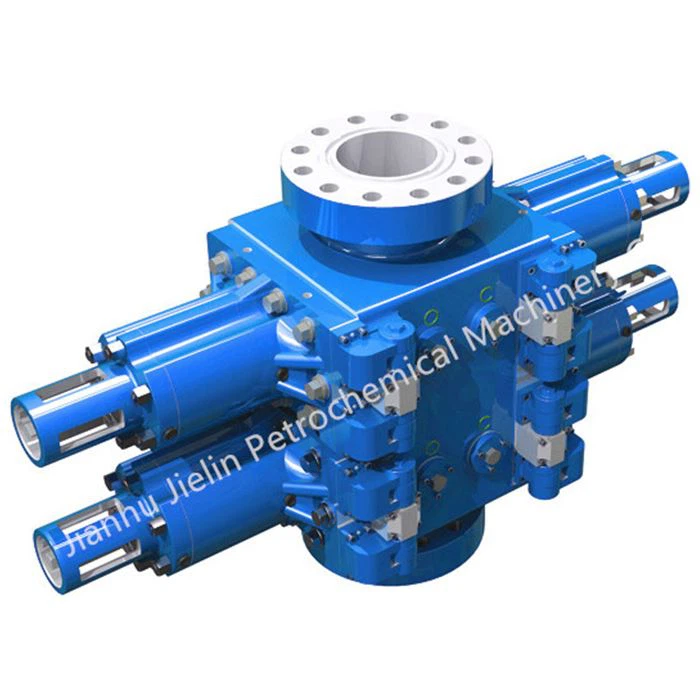

Annular BOP
The Annular BOP is another key component of the well - control system. Although it offers the advantage of being able to seal around various sizes of tubulars and irregular shapes, it has some disadvantages. The sealing element of the annular BOP, which is a large rubber packing unit, is relatively expensive to replace. Also, the closing and opening times of the annular BOP are typically longer compared to ram BOPs. This can be a significant drawback in emergency situations where quick shut - in is required.
Ram BOP
The Ram BOP is the most commonly used BOP type, but it also has its limitations. As mentioned earlier, the different types of rams (blind, pipe, shear, etc.) have their own specific disadvantages. In addition, the Ram BOP requires regular maintenance to ensure proper functioning. The hydraulic systems that operate the rams can be prone to leaks and failures, which can lead to operational disruptions.
In conclusion, while BOP ram types are essential for well - control in the oil and gas industry, each type has its own set of disadvantages. Operators need to carefully consider these drawbacks when selecting the appropriate BOP ram types for their operations. As a supplier, we understand these challenges and are committed to providing high - quality products and technical support to help you overcome them. If you are in the process of evaluating BOP ram types for your well - control needs, we encourage you to contact us for a detailed discussion. Our team of experts can provide you with in - depth information and guidance to ensure you make the best choice for your specific requirements.
References
- API RP 16E, Recommended Practice for Installation, Operation, and Maintenance of Blowout Preventer Systems for Drilling Wells.
- SPE publications related to well - control technology and BOP systems.