

How does Ram BOP improve safety in industrial processes?
May 15, 2025
Leave a message
In the high - stakes world of industrial processes, especially in the oil and gas sector, safety is not just a priority; it's an absolute necessity. One of the key components that significantly contribute to enhancing safety in these operations is the Ram Blowout Preventer (Ram BOP). As a supplier of Ram BOPs, I've witnessed firsthand how these remarkable pieces of equipment play a crucial role in safeguarding industrial processes.
Understanding the Basics of Ram BOP
A Ram BOP is a specialized valve system used in well - control operations. It is designed to seal, control, and monitor the pressure within a wellbore during drilling, completion, and workover operations. The term "ram" refers to the movable components of the BOP. These rams are large, flat, and typically made of high - strength steel. They can be hydraulically or mechanically actuated to close around the drill pipe or completely seal the wellbore in the event of an emergency.

The design of Ram BOPs is based on the principles of pressure containment. When the pressure in the wellbore exceeds the safe operating limit, the rams are activated to close the opening, preventing the uncontrolled release of oil, gas, or other fluids. This is crucial because an uncontrolled wellbore blowout can lead to catastrophic consequences, including environmental damage, loss of life, and significant financial losses.
How Ram BOP Enhances Safety in Industrial Processes
Wellbore Pressure Control
One of the primary functions of a Ram BOP is to control the pressure within the wellbore. During drilling operations, the pressure in the wellbore can fluctuate due to various factors such as changes in the geological formation, the influx of formation fluids, or improper drilling practices. If the pressure is not properly managed, it can lead to a blowout.
Ram BOPs are equipped with sensors and control systems that continuously monitor the pressure in the wellbore. When the pressure exceeds a pre - set limit, the control system automatically activates the rams to close the wellbore. This rapid response helps to prevent the escalation of pressure and the potential for a blowout. For example, in deep - water drilling operations, where the pressure can be extremely high, Ram BOPs are essential for maintaining safe operating conditions.
Containment of Hazardous Fluids
In the oil and gas industry, the wellbore contains a variety of hazardous fluids, including oil, gas, and drilling mud. In the event of a well control incident, these fluids can be released into the environment, causing pollution and posing a significant risk to human health and safety.
Ram BOPs act as a barrier to contain these hazardous fluids within the wellbore. When the rams are closed, they create a tight seal that prevents the fluids from escaping. This containment not only protects the environment but also reduces the risk of fire and explosion, which can occur when flammable gases are released into the atmosphere. For instance, in onshore drilling operations, a well - functioning Ram BOP can prevent the spillage of oil and gas into nearby water sources or populated areas.
Emergency Shutdown Capability
Another important safety feature of Ram BOPs is their emergency shutdown capability. In the event of a major well control incident, such as a sudden increase in pressure or a loss of wellbore integrity, the Ram BOP can be quickly activated to shut down the well. This can be done manually or automatically, depending on the design of the control system.
The ability to perform an emergency shutdown is crucial for minimizing the damage caused by a well control incident. By quickly closing the wellbore, the Ram BOP can prevent the further release of fluids and reduce the risk of a full - scale blowout. This is particularly important in offshore drilling operations, where the consequences of a blowout can be far - reaching and difficult to control.
Compatibility with Other Well - Control Equipment
Ram BOPs are often used in conjunction with other well - control equipment, such as [Annular BOP]( /well - control/api - 16a - bop/annular - bop.html) and [Drilling Spools/Spacer Spools]( /well - control/api - 16a - bop/drilling - spools - spacer - spools.html). This combination of equipment provides a multi - layer defense against well control incidents.

The Annular BOP, for example, can provide a temporary seal around the drill pipe or in the open hole. It can be used in conjunction with the Ram BOP to provide additional pressure containment in case the Ram BOP fails or is unable to provide a complete seal. The Drilling Spools/Spacer Spools are used to connect different components of the well - control system and provide a stable platform for the operation of the BOPs.
Real - World Applications and Case Studies
To illustrate the effectiveness of Ram BOPs in enhancing safety, let's look at some real - world applications and case studies.
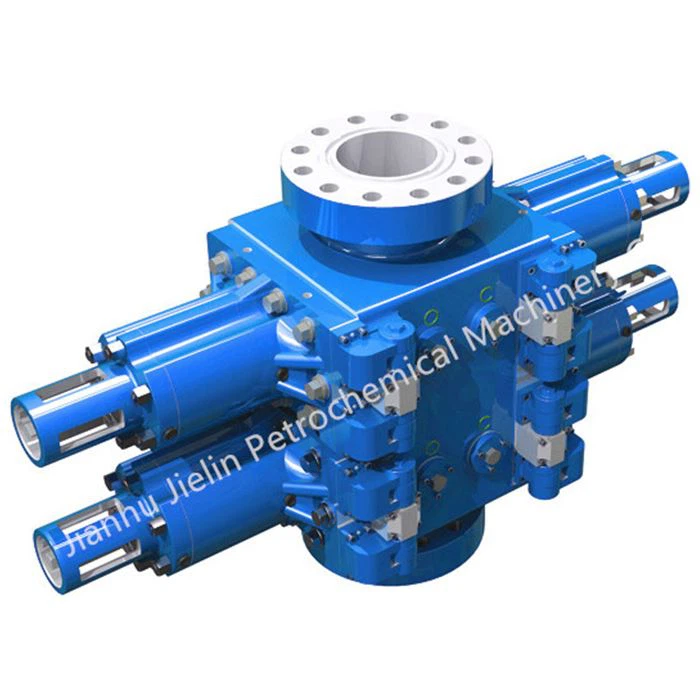
In the Gulf of Mexico, where offshore drilling is a major industry, Ram BOPs have been instrumental in preventing well control incidents. In one case, a drilling rig was operating in deep water when the pressure in the wellbore suddenly increased. The control system of the Ram BOP detected the pressure increase and automatically activated the rams to close the wellbore. This rapid response prevented a potential blowout and saved the rig and its crew from a potentially catastrophic event.
In another case, an onshore drilling operation was experiencing problems with the wellbore integrity. The Ram BOP was manually activated to shut down the well, preventing the release of oil and gas into the surrounding environment. The incident was quickly contained, and the well was later repaired without any major damage.
Maintenance and Inspection of Ram BOPs
To ensure the continued safety and effectiveness of Ram BOPs, regular maintenance and inspection are essential. Maintenance procedures typically include checking the hydraulic systems, replacing worn - out seals and gaskets, and testing the rams for proper operation.
Inspections are usually carried out by qualified personnel using specialized equipment. Non - destructive testing techniques, such as ultrasonic testing and magnetic particle testing, are often used to detect any cracks or defects in the rams and other components of the BOP. Regular maintenance and inspection help to identify and address any potential problems before they can lead to a well control incident.
Conclusion
In conclusion, Ram BOPs are a critical component in enhancing safety in industrial processes, particularly in the oil and gas industry. Their ability to control wellbore pressure, contain hazardous fluids, provide emergency shutdown capability, and work in conjunction with other well - control equipment makes them an indispensable tool for preventing well control incidents.
As a supplier of [Ram BOP]( /well - control/api - 16a - bop/ram - bop.html), I am committed to providing high - quality products that meet the strictest safety standards. If you are involved in industrial processes that require well - control equipment, I encourage you to consider our Ram BOPs. We offer a range of products that are designed to meet the specific needs of your operations. Whether you are drilling onshore or offshore, our Ram BOPs can provide the reliable safety solution you need. Contact us today to discuss your requirements and start a procurement negotiation.

References
- API Specification 16A, "Specification for Drilling and Well - Servicing Equipment", American Petroleum Institute.
- Well Control Handbook, various editions, published by industry associations.
- Case studies from major oil and gas companies on well control incidents and the role of BOPs.